
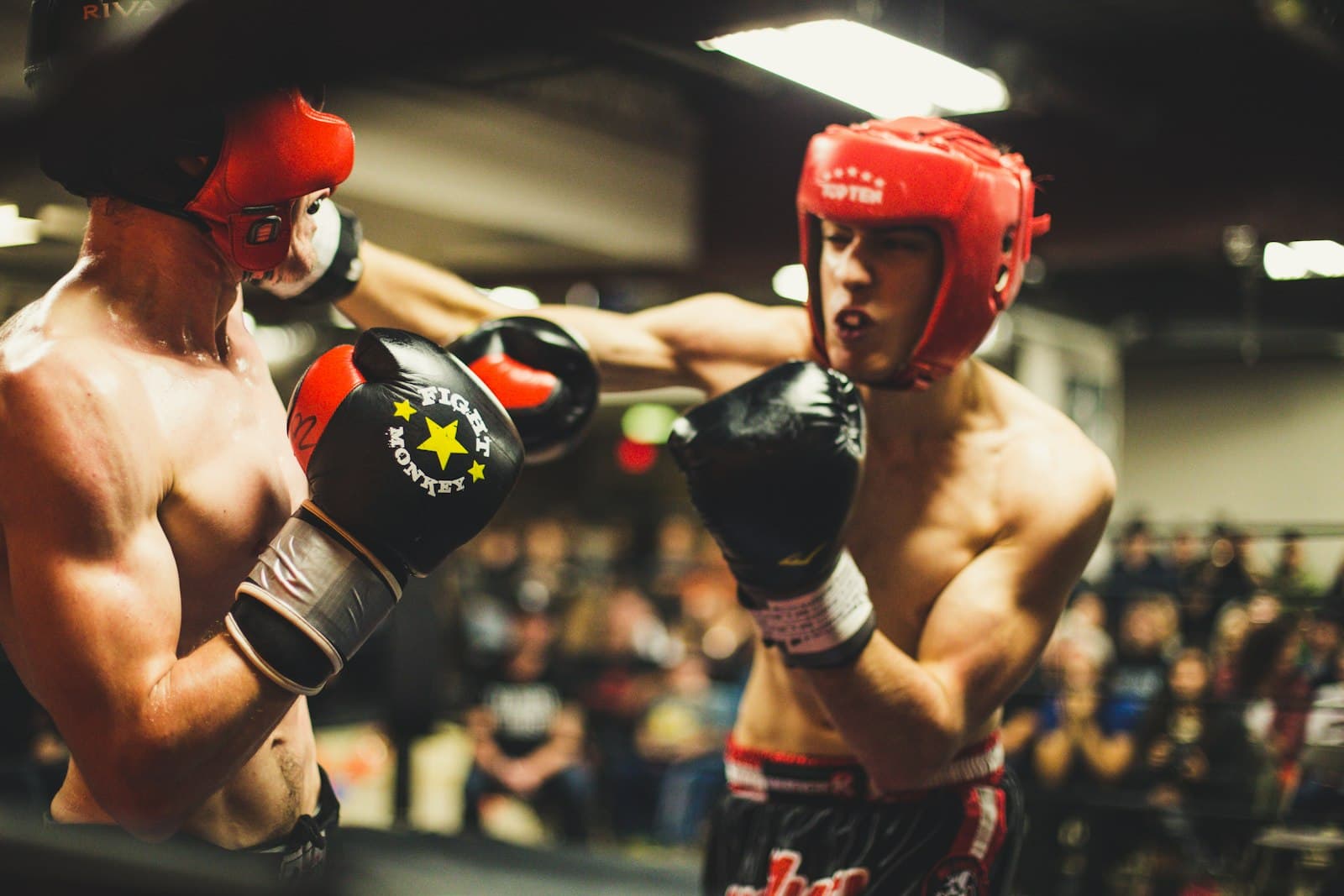
Why five is enough
A common beginner question on the mat: how many punches does a fighter actually need? The short answer — five, and most of them you'll use most of the time. Everything fancy is a variation on one of these. Master the five and you have the entire striking vocabulary in your hands.
1. The jab
The jab is the lead-hand punch — quick, light, almost lazy looking. It is the most important strike in the entire sport. It measures distance, breaks rhythm, sets up everything that follows. A good jab is a metronome the rest of the round dances around.
What it teaches: how to extend without falling forward. Most beginners over-commit on the jab and their guard collapses with it. Snap it out, snap it back.
2. The cross
The straight punch from the back hand. The first real "weapon" most members feel land on the pads. Power comes from the back foot pivoting and the hip rotating — not from the arm.
What it teaches: the kinetic chain. Floor through hip through shoulder through fist. If a coach ever taps your back foot during the cross, this is why.
3. The hook
The lateral punch. Lead hand or rear hand, thrown in an arc, often to the head or to the body. Powerful, but it costs you a guard hand to throw it — so timing matters.
What it teaches: rotation under load. The hook reveals whether your core actually connects your upper and lower body, or whether they're working as two separate machines.
Every punch is a window into how your body handles force. That's why we drill them slow before we drill them hard.
4. The uppercut
The rising punch, thrown short and inside an opponent's guard. Painful on the receiving end and surprisingly difficult to throw cleanly — most newcomers either swing it like a hook or stand it up like a press.
What it teaches: levering through the legs. A real uppercut is a small squat with a fist on top. Knees drive, hips drive, arm finishes.
5. The overhand
The arcing rear-hand punch that loops over the opponent's guard. The most "natural" punch for untrained fighters — and one of the riskiest to throw without setup, because it leaves the chin exposed.
What it teaches: patience. The overhand is the punch you only earn permission to throw after you've sold the jab.
How we drill them at GBC
Every Monday class opens with a "five-punch flow" — 30 seconds on each, slow shadow, then 30 seconds fast. It looks boring from the doorway. It is the reason members two months in start to look like fighters.
The mistake is rushing past these to chase combinations. Combinations are easy when the punches are clean. Combinations are useless when they aren't. Drill the five. The rest takes care of itself.