
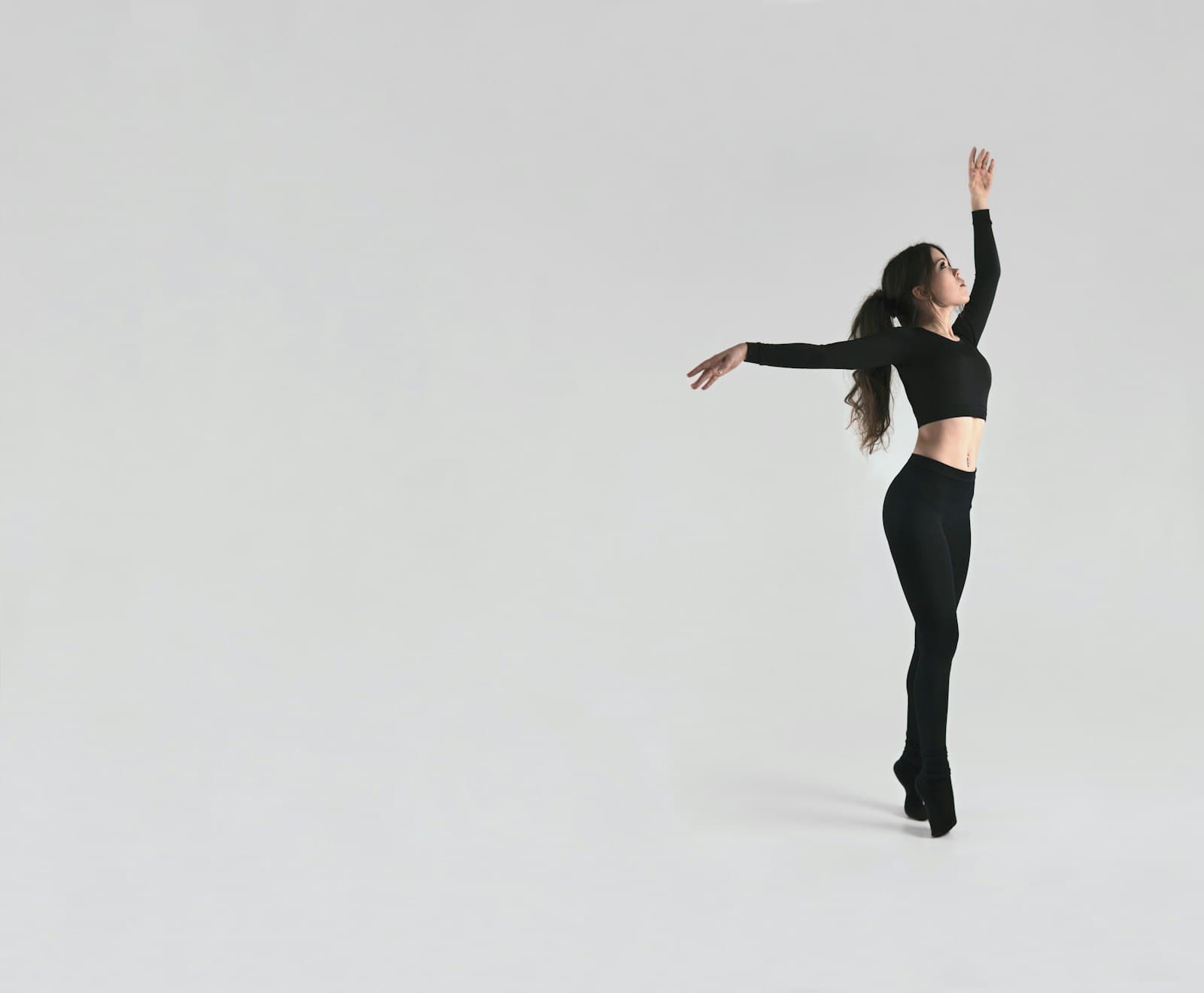
One building, two crowds, the same problem
If you walked through GBC on a Tuesday night, you'd see a contemporary dance class in one room and a kickboxing class in the other. Different music. Different shoes. The same underlying ask of the human body — control your weight, control your timing, do it under pressure.
The brand line we lead with is power meets rhythm. It isn't poetry. It's a description of what actually happens when both sides of the studio start to learn from each other. Members who train across both disciplines see the connection inside a month.
What dance gives a fighter
Watch a beginner on the kickboxing pads. The first thing that breaks is rhythm. The combinations come out staccato — punch, pause, punch, pause — instead of flowing. The cross is power. The pause between the cross and the hook is dance.
Dance training fixes three things in a fighter, almost automatically:
- Footwork. Dancers move on the balls of their feet by default. A boxer who has done six weeks of contemporary or hip-hop suddenly stops getting caught flat-footed.
- Hip mobility. Almost every kick is a hip rotation. Dancers have hips that other athletes envy, because they spend a third of every class opening them up.
- Musicality. The best fighters set their own tempo and force the opponent to match it. That's not athletic — that's musical.
What fighting gives a dancer
Now flip it. The most common note a dance coach gives an intermediate student is commit. The choreography is correct. The energy isn't.
Combat training fixes that without ever mentioning the word.
- Posture under stress. A kickboxer learns to keep their chin tucked, hands up, spine long when their lungs are burning. Bring that habit into a dance run-through and everything looks twice as sharp.
- Power generation. A real cross is a full-body kinetic chain. A real hit in waacking or hip-hop is the same chain, redirected into the arms. Members who train both immediately get harder, cleaner hits in their choreography.
- The willingness to commit. This is the big one. Striking trains you to throw the punch. Dance asks you to throw the move. The hesitation is the same hesitation, in both rooms.
Power and rhythm are not two separate skills. They are two answers to the same question — what does your body do when it really means it?
The members who train both
A growing share of our roster now does at least one combat class and at least one dance class per week. It started as a brand idea. It turned into a training method. The 12-class monthly pass on kickbox + crossfit pairs cleanly with a 4-class dance pass — most members who try the combination keep it.
There is no formal "cross-training" program at GBC. There doesn't need to be. The building does it for you. Two doors, one body, both sides talking to each other by the end of the second month.
If you've only been training one side, pick a single trial class on the other side this month. 500 ₺. One hour. The lesson the other room teaches you will travel home with you.